
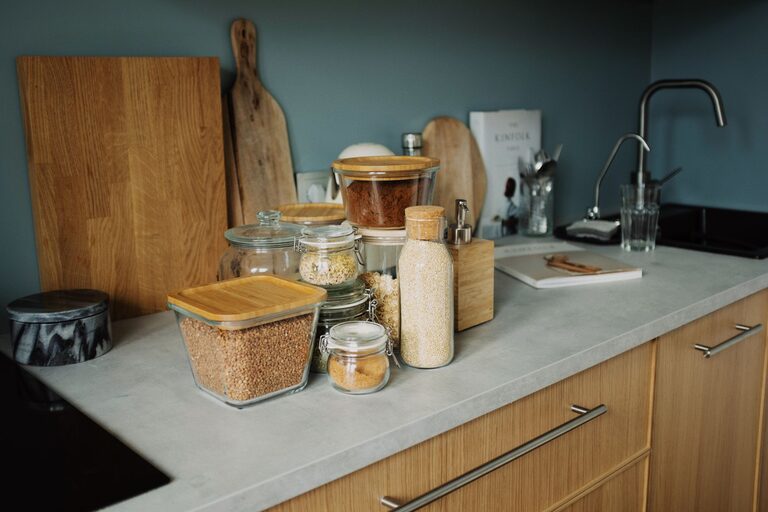
How to Make Your Kitchen Counters Clutter Free
A clutter-free kitchen counter can make the entire room feel cleaner, calmer, and easier to use. When appliances, papers, food packages, and dishes pile up, even a spacious kitchen can feel crowded. The good news is that you do not need a complete remodel to create more open space.
With a few practical decisions and simple daily habits, you can keep your counters clear while making the items you use most easy to reach.
Start With a Complete Counter Reset
Before organizing anything, remove every item from your kitchen counters. Place everything on a table, the floor, or another clean surface. Starting with an empty counter helps you see how much space you actually have and makes it easier to make thoughtful choices.
Clean the counters while they are empty. Wipe away crumbs, spills, grease, and dust, paying attention to corners and the spaces around appliances.
Next, sort the items into four groups:
– Use every day
– Use occasionally
– Store somewhere else
– Donate, recycle, or discard
Try not to put anything back immediately. First, consider whether each item truly needs to live on the counter.
Decide What Belongs on the Counter
Kitchen counters are valuable work space, so reserve them for items that earn their place. A useful rule is to keep out only things you use daily or several times a week.
Items that may deserve a permanent spot include:
– A coffee maker used every morning
– A knife block used regularly
– A cooking utensil holder
– A toaster used often
– A small cutting board for daily meal preparation
Items that are used less frequently can usually go inside a cabinet, pantry, drawer, or nearby closet. Large appliances such as mixers, slow cookers, and food processors often take up significant space. If you use them only occasionally, store them away and bring them out when needed.
Also look at duplicate items. You may not need several can openers, measuring cup sets, or serving tools. Keeping the most useful version and storing or donating extras can quickly reduce clutter.
Create Zones for Everyday Tasks
A counter is easier to maintain when each area has a clear purpose. Instead of spreading items across the entire surface, divide the kitchen into simple zones.
Cooking Zone
Place frequently used cooking tools near the main preparation area. A container for spatulas, spoons, and tongs can keep these tools together, but avoid filling it with items you rarely use.
Keep cutting boards, knives, and basic seasonings nearby if they are part of your normal cooking routine. Grouping related items helps you prepare meals without searching through multiple drawers.
Beverage Zone
If you make coffee or tea every day, create a small beverage station. Keep the coffee maker or kettle with the items you use most often, such as mugs, coffee, tea bags, or sweeteners.
Use a small tray to contain these supplies. A tray makes the area look more organized and allows you to move everything at once when cleaning.
Baking Zone
If you bake regularly, keep baking supplies together in a cabinet or pantry. A labeled container or basket can hold measuring cups, baking powder, liners, and other small items.
Avoid leaving baking ingredients on the counter unless you use them almost daily. Open packages can make the kitchen look untidy and may attract crumbs or pests.
Use Storage That Frees Counter Space
Small storage improvements can make a major difference. Look for ways to use vertical space, cabinet doors, and drawers more effectively.
Helpful options include:
– A wall-mounted rack for cooking utensils
– A magnetic strip for suitable kitchen tools
– Hooks under cabinets for mugs
– A shelf riser inside a cabinet
– A tray for oils and seasonings
– Drawer dividers for small tools
– Bins for snacks or food packages
– A basket for items that need to be put away
If you use open shelves or wall storage, keep the display simple. Too many visible items can create the same crowded feeling as a full countertop. Choose attractive, useful pieces and store the rest behind closed doors.
Cabinet door organizers can also hold pot lids, cutting boards, cleaning supplies, or small containers. This adds storage without using additional counter space.
Manage Appliances Carefully
Appliances are among the biggest sources of counter clutter. Begin by identifying which appliances you truly use often. Then decide whether each one should stay out, move to a more convenient storage area, or be stored away.
For appliances that remain on the counter, leave enough space around them to use and clean them comfortably. Avoid placing several large appliances side by side if they block your main work area.
You can also create an appliance schedule. For example, keep the coffee maker out each day but return a blender or toaster oven to storage after use. If an appliance is difficult to put away, consider moving it to a lower cabinet or a nearby shelf that is easier to access.
The best storage solution is one you will actually use. A cabinet that requires moving five other items first is unlikely to keep appliances off the counter.
Find a Better Home for Papers and Miscellaneous Items
Mail, receipts, school papers, keys, and small household items can quickly take over kitchen counters. Give these items a dedicated place away from food preparation areas.
A small wall organizer, basket, or tray near the entrance can collect mail and keys. Set a regular time to sort the contents and remove anything that no longer needs attention.
For papers that require action, use a simple system:
- Recycle unwanted papers immediately.
- Place items that need attention in one folder.
- File important documents in their proper location.
- Set a weekly time to review the folder.
If the kitchen counter becomes a drop zone for bags, chargers, and other personal items, add a basket or shelf elsewhere in the home. Moving the drop zone away from the kitchen can prevent clutter from returning.
Keep Food Items Under Control
Food packages are another common source of counter clutter. Store unopened food in a pantry or cabinet whenever possible. Use baskets or bins to group similar items, such as breakfast foods, snacks, or baking supplies.
Avoid keeping too many open packages in plain view. Transfer frequently used foods into labeled containers if that makes them easier to stack and identify. Choose containers that fit your storage space instead of buying a large collection before measuring your shelves.
Fruit bowls can be useful, but they can also become crowded. Keep only the amount of fruit your household will eat soon, and move extra produce to the refrigerator or pantry when appropriate.
Use a Simple Daily Reset
A short reset at the end of the day is one of the most effective ways to maintain a clutter-free counter. You do not need a long cleaning session. Aim for five to ten minutes.
During your reset:
– Return appliances and tools to their storage spots.
– Put food away.
– Move dishes to the dishwasher or sink.
– Recycle or file papers.
– Wipe the counters.
– Check for items that belong in another room.
Involve everyone who uses the kitchen. When each person returns their own items, the counter stays organized with less effort.
Review the System Regularly
Your kitchen organization should change as your habits change. If an item repeatedly ends up on the counter, ask why. It may need a more convenient home, or you may use it often enough to justify keeping it out.
Every few months, repeat a quick review. Remove expired food, donate duplicate tools, and adjust storage zones that are no longer working.
A clutter-free counter is not about keeping the kitchen perfectly empty. It is about creating enough open space to prepare food comfortably and making it easy to put things away. When every item has a practical home, daily cleanup becomes faster and the kitchen becomes a more pleasant place to use.
